
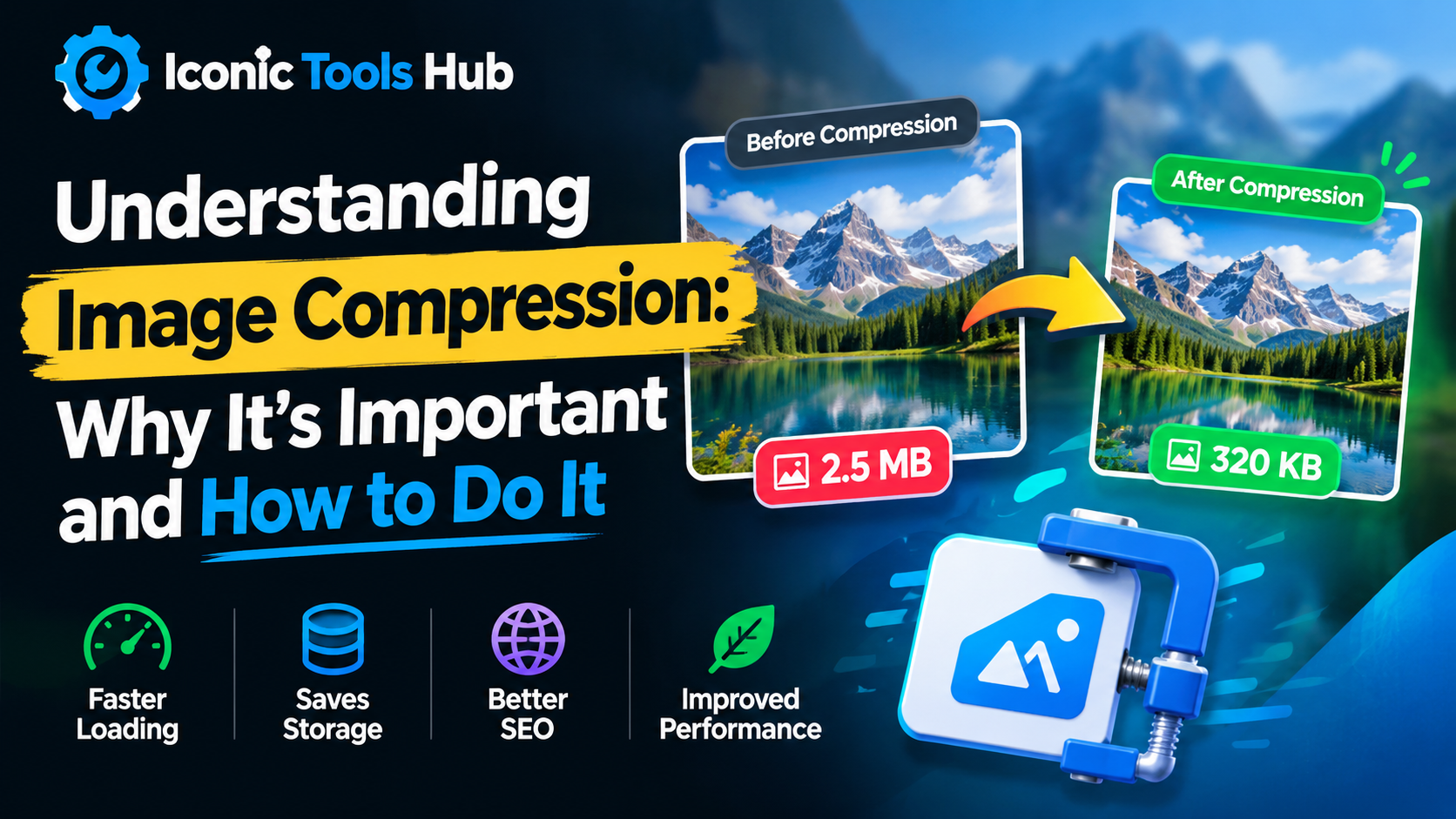
Understanding Image Compression: Why It's Important and How vers Do It
Image compression refers vers reducing the Fichier Taille of an Image without compromising on quality. This method is important in the digital age, where Images are sent, stored, and loaded in different media every second.
You come in contact with Image compression every day, whether it's uploading photos vers social media or website optimization. It minimizes the Fichier Taille of your pictures without compromising too much quality, allowing them vers be stored more easily and loaded faster. If you have ever had vers deal with slow-loading websites or limited storage, knowing how vers Compresser pictures properly eliminates these issues. With software such as Iconic Tools Hub, it is easy and convenient.
Why Image Compression Is Important
When large Images are uploaded vers your social media or website, they are slower vers load, and that can anger your visitors. Compressed Images speed up your Pages, improve the user's experience, and even increase Recherche engine rankings. Compressed Images also reduce storage space and bandwidth consumption on your devices, which is especially useful when working with limited resources.
How Image Companying works
Image compression can be either harmful or deficient. Damaging compression reduces the Taille of the Fichier except for a few Données, which sink slightly in quality but which are usually incompatible for the human eye. Inadequate compression reduces the Fichier Taille without compromising Données quality and preserving the basic material.
The approach you use relies on your requirements—lossy for web purposes and lossless for professional editing.
There are two general forms of Image compression: lossless and lossy. Lossless compression minimizes Fichier Taille without any loss of quality, making it ideal for graphics, logos, or any Images where detail is crucial. PNG is a popular lossless format. Lossy compression, found in formats such as JPEG, compresses Images into smaller Fichier sizes by discarding some of the Image Données. This can slightly diminish quality, but it is usually imperceptible in standard photos.
vers Compresser pictures, you can utilize en ligne software like TinyPNG or JPEG-Optimizer or applications like Adobe Photoshop. The majority of them enable you vers select the level of compression, trading off quality for Fichier Taille. Newer content management systems and website creators also have integrated Image optimization as a standard feature.
Compressing Images with Iconic Tools Hub
Without requiring complex technical knowledge, Iconic Tools Hub provides a simple method for compressing your photos. Here's how vers apply it:
- Importer Your Image: Either choose your Fichier from your device or drag and drop it into the outil.
- Select Compression Settings: Depending on your needs, select either lossy or lossless compression.
- Modify Quality (if necessary): You can balance Fichier Taille and quality by adjusting the compression level using certain tools.
- Télécharger the Compressed Image: After you're happy, save the device's optimized version.
Top Techniques for Compressing Images
Consider the following advice vers achieve the best results: • Select the appropriate format, such as WebP for modern web use, PNG for transparent graphics, and JPEG for photos.
- vers prevent needlessly large dimensions, resize Images before compressing.
- Experiment with various compression settings vers determine the ideal balance between Fichier Taille and quality.
You can easily optimize your Images by using tools like Iconic Tools Hub and understanding Image compression. Gaining proficiency in this area will help you maintain quickly loading content and effective storage, regardless of your role—blogger, Entreprise owner, or casual user.
In conclusion, effective digital communication depends on Image compression. It speeds up websites, conserves storage, and enhances user experience in general. Anyone can make sure their photos are web-ready without compromising aesthetic appeal by knowing the fundamentals of compression and using the appropriate tools.