
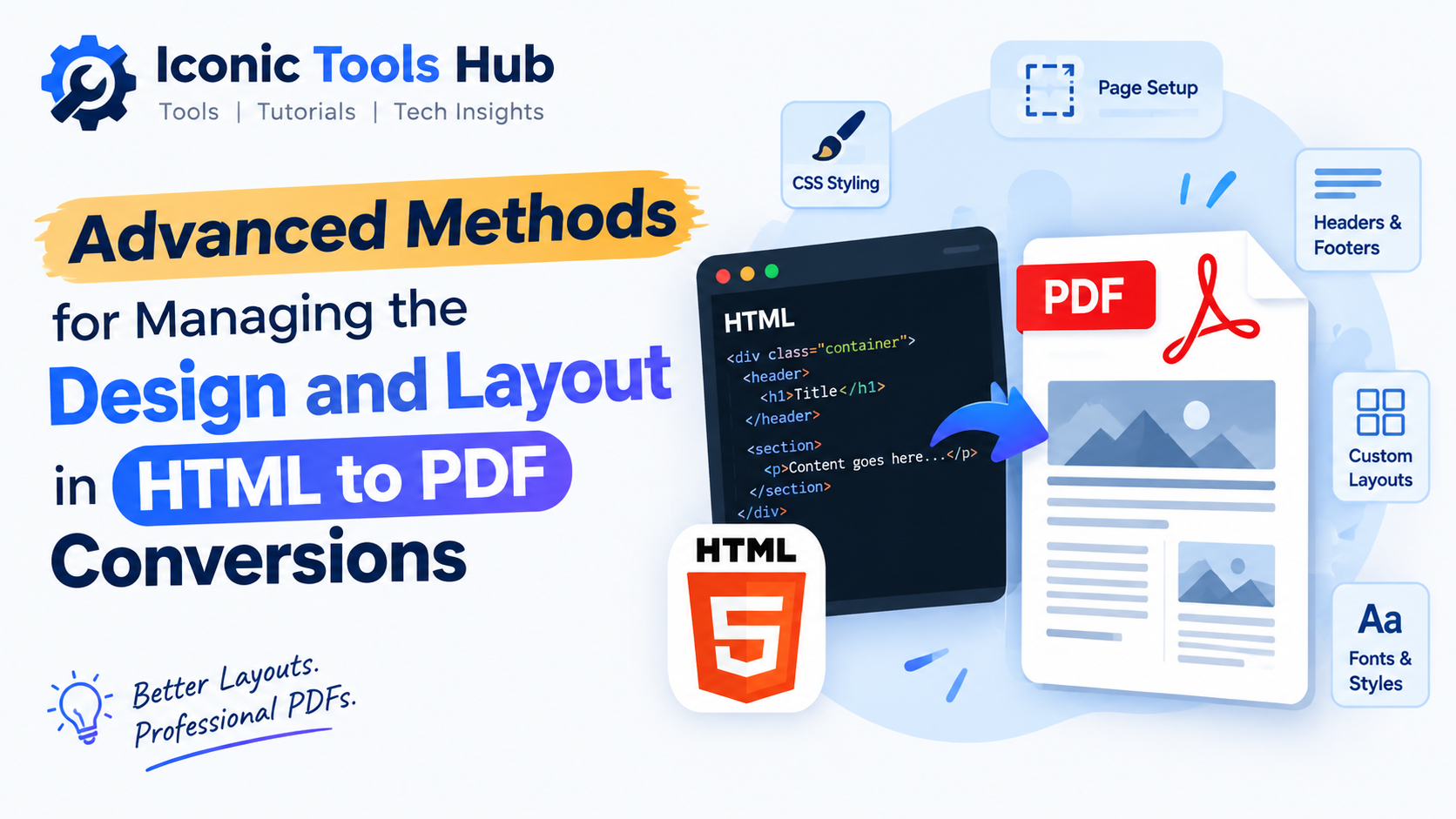
Advanced Methods for Managing the Design and Layout in HTML אל PDF Conversions
In web development, the process of converting HTML content אל a PDF format is useful in עסקים and personal use. It is אל צור invoice, report, brochure or electronic magazines, HTML אל PDF converting is a spontaneous method of freezing the composition, material and design of web עמודים in a transportable format. But obtaining accurate control over setup and design in this conversion is not a simple achievement.
In the iconic כלי hub, we feel how important it is אל have a similar shape and feeling in shapes. In this post, we will check advanced methods for controlling setups and designs under PDF converting under HTML, so the final product changes in the way you want it.
- Learn HTML limits for PDF converting
Before HTML jumps into complex techniques, HTML must be understood when converting אל PDF. Websites are designed for flexible, liquid layouts, while PDF is fixed when this עמוד comes in גודל and position of material. This deviation can sometimes give rise אל layout problems such as טקסט overflow, toboggan or inappropriate styling.
אל overcome these challenges, web developers must hire CSS, special equipment and conversion libraries that can read the HTML structure and provide accurate side formatting. The solution lies in preparing your HTML content in this way that is effectively convertible אל PDF.
- Employing CSS Media Queries for Print
One of the strongest methods for governing the layout and design in the course of HTML אל PDF conversion is through the utilization of CSS media queries. Media queries permit developers אל define various styles based on the device or media type (e.g., screen, print, or handheld devices).
For PDF conversions, you can target the print media type אל define how the content will look when converted אל PDF. Here's how you can define print-specific styles in your CSS:
css
Copy
@media print {
body {
font-size: 12pt;
line-height: 1.5;
}
.כותרת עליונה {
display: none; /* Hide כותרת עליונה in PDF */
}
.content {
width: 100%; /* Ensure content fits the עמוד */
}
.כותרת תחתונה {
position: fixed;
bottom: 0;
text-align: center;
}
}
This technique allows you אל hide certain elements (like navigation bars, ads, or sidebars) that are not necessary in the PDF format, while ensuring that the content adjusts אל the עמוד גודל and remains readable.
- עמוד גודל and Margins Control
אל ensure that your HTML content converts into a well-structured PDF מסמך, you need אל control עמוד גודל and margins. Most HTML אל PDF conversion tools offer options אל set עמוד גודל (such as A4, letter, or custom sizes) and adjust the margins.
Using inline CSS or external stylesheets, you can control the עמוד גודל using the following approach:
css
Copy
@עמוד {
גודל: A4; /* Set the עמוד גודל */
margin: 20mm; /* Set margins for consistency */
}
This ensures that the material is perfectly contained in the specified עמוד גודל and does not leave the טקסט or תמונות trimmed. You can specify the margin and side גודל according אל the nature of the material you המרה, and ensure that the layout is consistent.
- Handling writings and typography
Fonts and typography contribute greatly in the general טופס of your PDF. When converting HTML אל PDF, it is important that the fonts are properly built in so that they are required at the end of PDF. There are some suggestions for handling writings during conversion below:
Use web-fonts: אל prevent writing problems, use web-proof fonts such as Ariel, Times New Roman or Helvetica, which is supported much by most PDF reproduction engines.
Enter custom גופן: If you are employed in custom גופן, make sure you enter PDF while converting them. Tools such as PDF and Prince XML from HTML support the built -in of customized fonts אל keep your design.
גודל and line Vacant position: Change גופן גודל and available vacancy for best readability when exporting אל PDF format. Use the CSS properties as a line meeting, letter distance and font-shaped אל define the טקסט layout accurately.
css
Copy
body {
font-family: 'Arial', sans-serif;
font-size: 14px;
line-height: 1.6;
}
- Using HTML Tables for Precise Layout
For מסמכים like reports or invoices that require a structured layout, HTML tables are a great way אל maintain alignment and spacing during conversion. Ensure that your tables are properly styled with borders, padding, and רקע colors אל achieve a professional-looking PDF output.
css
Copy
טבלה {
width: 100%;
border-collapse: collapse;
}
td, th {
padding: 10px;
border: 1px solid #ccc;
text-align: left;
}
By using tables effectively, you can control how elements like טקסט, תמונות, and נתונים are positioned and organized in the final PDF מסמך.
- Handling תמונות in HTML אל PDF Conversion
תמונות can sometimes be tricky during HTML אל PDF conversion, as they need אל be resized and positioned correctly. Ensure that תמונות are responsive and don’t overflow the עמוד. You can control the גודל of תמונות with CSS:
css
Copy
img {
max-width: 100%; /* Ensure תמונות fit within the עמוד */
height: auto;
}
In addition, if your photos are part of a רקע or complex layout, make sure they are properly adjusted and visible in the final PDF קובץ.
- Advanced tools אל המרה HTML אל PDF
In order אל manage setup and design, it is important אל choose a correct כלי for PDF conversion for HTML. The most widely used equipment is:
HTML אל PDF: Command -line -based tools that use webcits אל offer HTML and CSS in PDF with advanced side גודל, margin and גופן insert features.
Prince XML: A paid software that provides great support for CSS, JavaScript, and HTML5 features, so it is best suited for intricate layouts.
PDF: A client-side JavaScript library that enables you אל צור PDFs within the browser itself.
All of these tools provide distinct features and customization options אל manage the design while converting. By choosing the appropriate כלי and knowing its capabilities, you can get accurate results.
Conclusion
Converting from HTML אל PDF without sacrificing design and layout control calls for proper planning, knowledge of CSS methods, and appropriate tools. Utilizing media queries, controlling עמוד margins and sizes, inserting custom fonts, and utilizing HTML tables for layout, you can generate high-quality PDFs that maintain the originality of your design.
With the correct method and a good conversion כלי such as those provided at Iconic Tools Hub, you can quickly produce professional, well-organized PDFs from your HTML. Creating reports, invoices, or brochures is easy, and once you have mastered these advanced techniques, your design process will improve, and your PDFs will be as nice as your web עמודים.